Mold Inspection in Denton: What a Texas Mold Assessment Covers
In Texas a mold inspection has a legal name, mold assessment, and it needs a state license when someone does it for hire. The assessor's job is to find the water, measure how far the mold has spread, and write the plan the remediator must follow.
A mold inspection in Denton is a licensed Texas mold assessment: a visual search, moisture readings, samples only when they answer a question, and a written protocol if remediation is needed. HomeGuide (2023) puts an inspection at $300–$650, with air samples at $100–$300 each. The assessor cannot also do the removal.
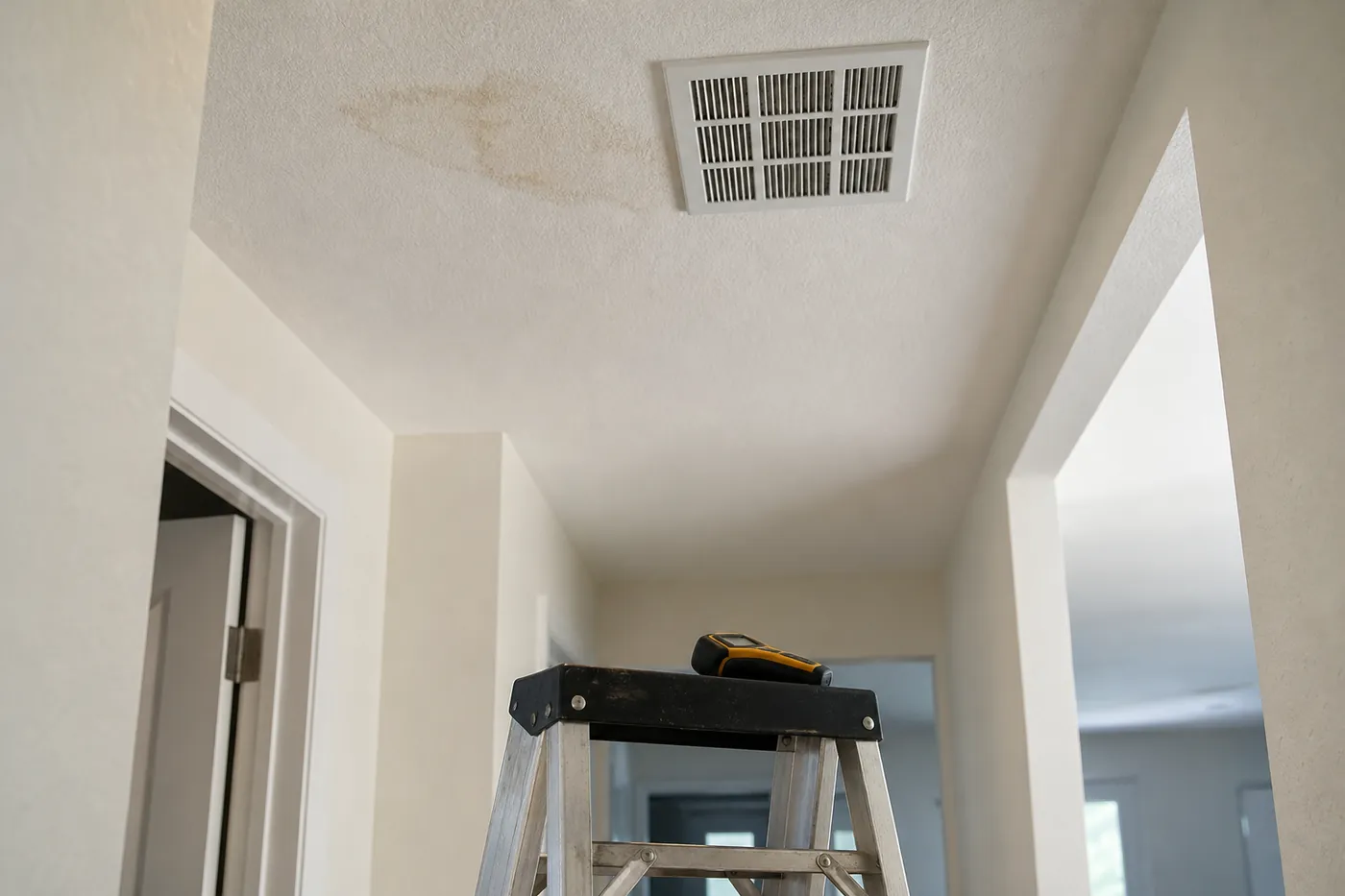
What a mold inspection in Denton should cover
- The water first. Moisture meter readings on walls, ceilings and floors near any stain, and a look at plumbing, windows and the roof line above it.
- The cooling system. The air handler, drip pan, condensate line and the supply registers, since in a long cooling season they are a common source.
- How far it goes. An estimate of the affected square footage, which decides whether the 25-square-foot Texas threshold applies.
- A written result. If remediation is needed, a protocol listing areas, quantities and methods, which by law reaches you before any work starts (Texas Occupations Code Sec. 1958.151).
When is mold testing worth paying for?
Less often than sales pitches suggest. The EPA says that in most cases, if visible mold is present, sampling is unnecessary, and that no federal limits exist for mold spores, so a lab number cannot show a house passes or fails a standard. The CDC says you do not need to know the type of mold and does not recommend testing. Samples do earn their fee in three situations: a musty smell with no visible source, clearance after remediation, and a sale or dispute where a written record matters. Ask the assessor what question each sample will answer before agreeing to it.
Where assessors look in a Denton house
Half of Denton's homes date from 2000 or later and the median from 1997 (U.S. Census ACS 2020–2024), so many have sealed windows, attic ductwork and an air handler overhead. In those houses the usual suspects are the ceiling under the attic unit, closets on exterior walls, the bathroom ceiling where a fan vents poorly, and the cabinet under the kitchen sink. In the older houses closer to the square, add window sills and wall cavities where window units drip. Prices for each step are in the Denton mold removal cost guide.
Questions to ask a Denton mold assessor
- What is your TDLR license number, and is it for assessment?
- Which samples, if any, will you take, and what will each one tell me?
- Is the post-remediation clearance visit included, or a separate price?
- Will the protocol name the cause of the moisture, not just the mold?
- Do you have any ownership tie to a remediation company? (Texas law forbids one on the same project.)
Questions homeowners ask
Are store-bought mold test kits worth it in Texas?
Rarely. Mold spores are in all outdoor air, so a settle-plate kit almost always grows something and says nothing about where the water is. HomeGuide (2023) lists kits at $10–$100. A kit result also carries no weight in a Texas sale or insurance file, where a licensed assessor's report does.
What are you seeing, and where?
A line or two is plenty: the room, roughly how big the patch is, and whether there was a leak, a storm or an AC problem first. Say if you rent, or if you are buying or selling. It goes to one independent mold specialist in the Denton area, who follows up with you.