Mold Remediation in Denton, From the Written Protocol to the State Certificate
Mold remediation is the removal, cleaning and treatment of mold-damaged material. On any Denton job of 25 contiguous square feet or more, it must be done by a company holding a Texas mold remediation license, working to a plan written by a separate assessor.
Mold remediation in Denton follows the assessor's protocol: contain the area, remove what cannot be cleaned, HEPA-clean the rest, dry it, then pass a clearance check. Within 10 days, the remediator owes you a certificate of mold remediation. HomeGuide (2026) puts most jobs at $1,500–$6,000.
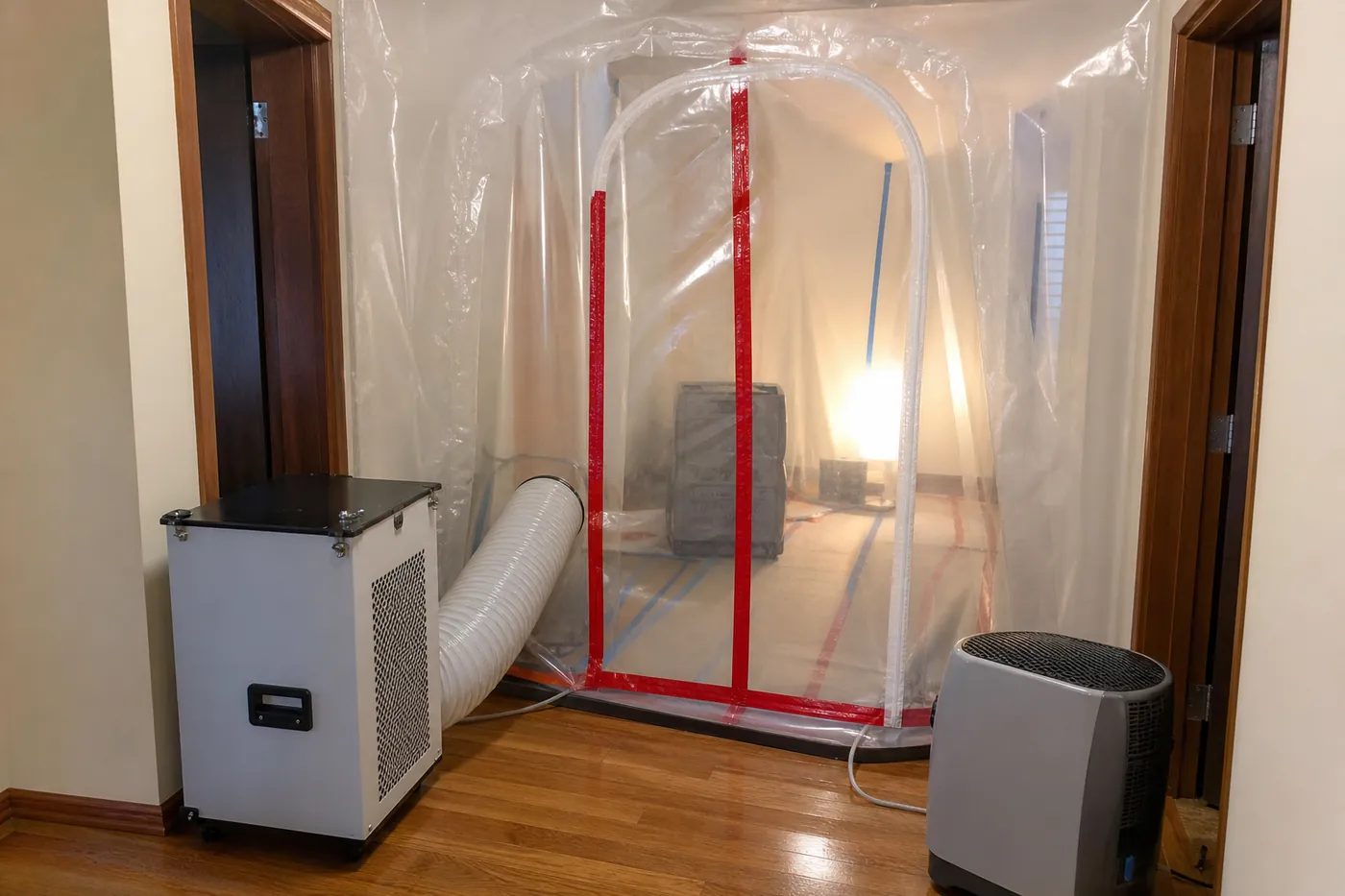
What mold remediation in Denton involves, step by step
- Fix the source. The leak, the clogged condensate line or the roof damage is repaired first, or the mold returns.
- Contain. Plastic sheeting and negative air pressure keep spores in the work area while material comes out.
- Remove. Porous material with growth, such as drywall, insulation and carpet pad, is bagged and taken out.
- Clean. Framing and hard surfaces are cleaned and HEPA-vacuumed.
- Dry. Fans and dehumidifiers bring materials back to normal moisture.
- Clear. The licensed assessor runs a post-remediation assessment, the only way a Texas project achieves clearance (TDLR).
The paperwork Texas law requires
Before work begins you get the state's Consumer Mold Information Sheet and the written work analysis. Within 10 days of completion, the remediator must give you a certificate of mold remediation, carrying the assessor's statement that the mold was remediated under the protocol; if the cause was also fixed, the assessor notes that too (Sec. 1958.154). The remediator must also give you copies of the before-and-after photographs Texas requires it to keep (Sec. 1958.156). File all of it with the house papers.
Why the certificate matters when you sell or insure
If you sell, Texas law says you must give the buyer a copy of every certificate issued for the property in the previous five years. TDLR notes that an insurer may not make an adverse underwriting decision based on previous mold damage when the certification requirements are met. And an owner is shielded from damages related to remediation that accrued before a certificate was issued (Sec. 1958.303). A homeowner who does the work alone, without a licensed assessor's protocol, cannot get clearance declared, so weigh that before tearing out a large area yourself.
Living in the house during the work
For one room behind containment, many households stay. For an attic air handler or ducts, the cooling system is off while the work goes on, which in a Denton July is its own problem, so ask about timing. HomeGuide (2026) says small to medium jobs take one to three days. Compare bids in the Denton mold removal cost guide.
Questions homeowners ask
Does spraying a mold killer count as remediation?
Not by itself. Texas defines remediation as the removal, cleaning, sanitizing, demolition or other treatment of mold-contaminated matter, and the EPA says bleach and other biocides are not a routine step. Growth inside drywall or insulation has to come out; spraying it leaves dead mold behind, and dead mold can still cause reactions.
What are you seeing, and where?
A line or two is plenty: the room, roughly how big the patch is, and whether there was a leak, a storm or an AC problem first. Say if you rent, or if you are buying or selling. It goes to one independent mold specialist in the Denton area, who follows up with you.