What That Smell, Spot or Stain Usually Means in a Denton Home
People rarely start by searching for mold remediation. They notice a smell, a ring or a speck and wonder whether it matters. Each sign below gets a short answer, followed by a link to the page with more on it.
Most signs of mold in a Denton home trace back to one water source: the cooling system, a plumbing leak, a roof opened by a storm, or a bathroom that never dries. A small patch under about 10 square feet is usually a cleanup job, per the EPA; a growing stain or a smell with no visible source is worth an inspection.
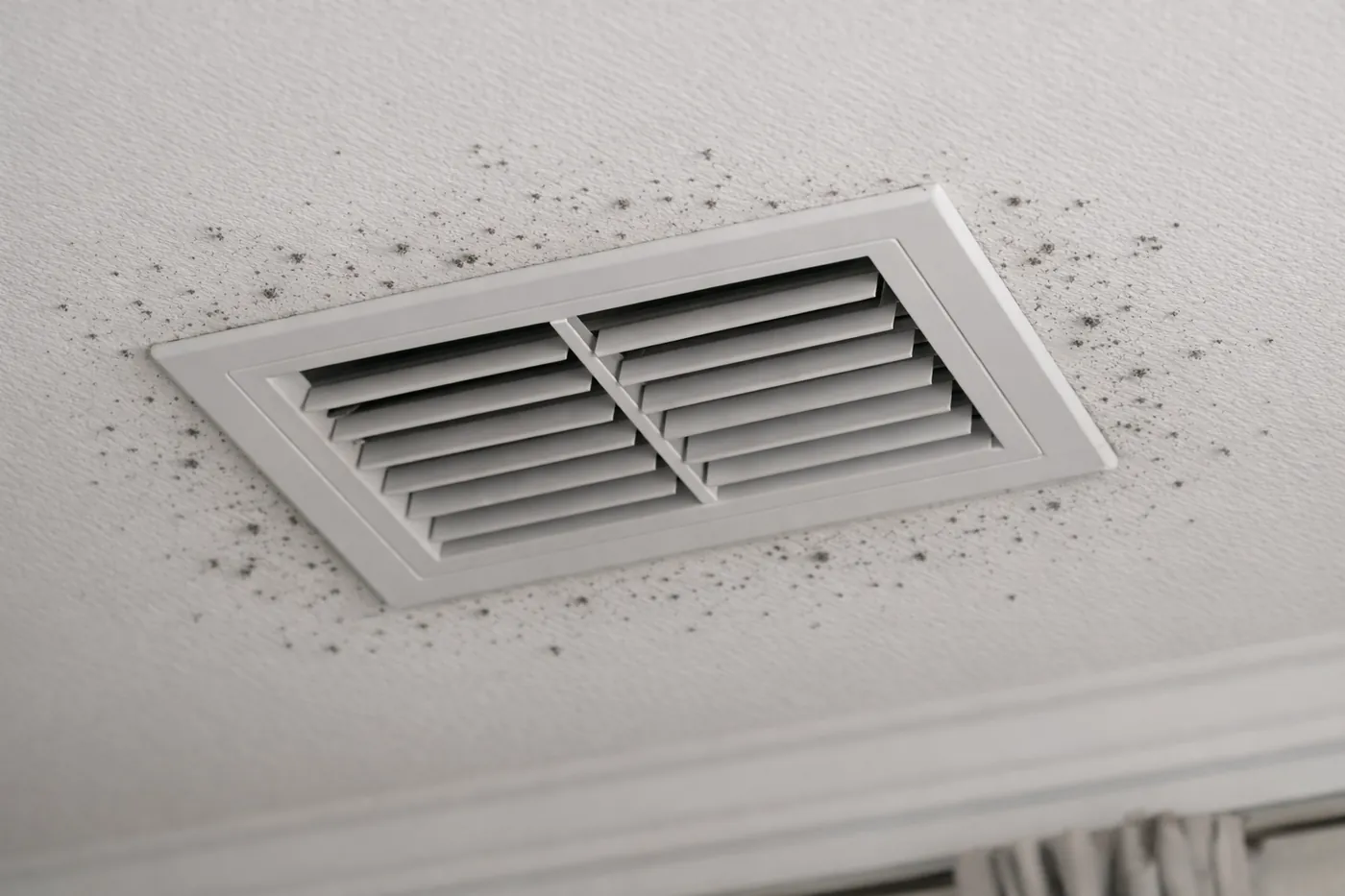
A musty smell when the AC kicks on. What does that mean?
It usually means standing water or growth somewhere in the cooling system: a drip pan that holds water, a slow condensate line, or a damp duct in the attic. The smell travels with the air, so it seems to come from every vent at once. Change the filter and look at the pan before anything else. See AC, duct and attic mold.
A brown ring on the ceiling under the attic unit. Is that mold?
It is a water stain first, and mold may follow if the drywall stays wet. Rings below an attic air handler usually mean an overflowing pan or a condensate line that backed up. Push gently on the center: soft drywall has been wet for a while. Have the cooling system checked before repainting. See AC, duct and attic mold.
Black specks in the shower grout and on the bathroom ceiling. Do I need a company?
Usually not. Surface growth on grout, caulk and painted ceilings is common where a bathroom fan is weak or not used. The EPA says areas under about 10 square feet are usually a household job: scrub with detergent and water, dry it, and run the fan longer after showers. If it returns within weeks, or the ceiling paint bubbles, look for a leak.
A closet on an outside wall smells damp and the shoes grow fuzz. Why?
Closets on exterior walls get little cooled air, so they run warmer and more humid than the room beside them, and stored items hold moisture. The EPA's target is indoor humidity below 60 percent, ideally 30 to 50. Leave the door open, keep items off the wall, and check the wall for a leak if a stain shows. See mold inspection.
Under the kitchen sink, the cabinet floor is soft and spotted. What now?
A slow drip from a supply line, the drain or the dishwasher connection is the usual cause. Fix the leak, pull everything out and let the cabinet dry with the doors open. Particle board that swelled rarely recovers and is replaced. Growth that runs into the wall behind it is a bigger job. See mold remediation.
Stains along the bottom of an exterior wall after a storm. Should I worry?
Yes, check it now. Wind-driven rain can enter at windows, doors and brick weep holes and wick up drywall from the bottom plate. The EPA's window for drying is 24 to 48 hours. Pull baseboards to look, and photograph the damage before throwing anything out if you plan an insurance claim. See storm and attic moisture.
My allergies are worse at home. Is mold the cause?
It may be one cause among several. The CDC says mold can cause a stuffy nose, sore throat, coughing or wheezing, burning eyes or a skin rash in some people, and none at all in others; people with asthma or mold allergies may react more severely. Talk to a doctor about symptoms, and look for the water source in the house. See mold inspection.
What are you seeing, and where?
A line or two is plenty: the room, roughly how big the patch is, and whether there was a leak, a storm or an AC problem first. Say if you rent, or if you are buying or selling. It goes to one independent mold specialist in the Denton area, who follows up with you.